Rule of Three Calculator: Direct and Inverse
Solve any proportion by cross multiplication, direct or inverse.


Free download. AI explanations and dark mode need the optional PRO subscription.
Try it now
Step by step
- Set the two ratios equal to each other100250 = 15x
- Cross multiply100 × x = 250 × 15
- Divide both sides by A to isolate xx = 250 × 15100 = 3750100
- Work out the divisionx = 37.5
Want this explained in plain English, offline, in dark mode? That is what the app adds, with PRO.
What it does
Rule of Three Calculator
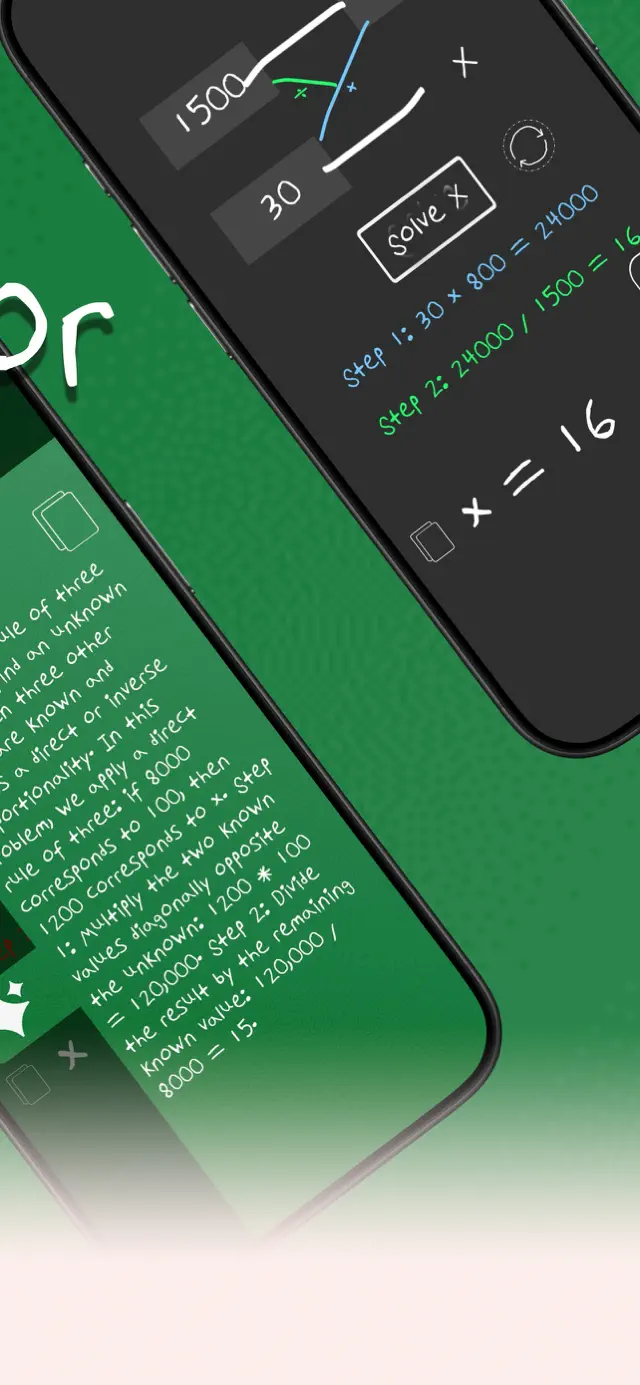
Enter the three values you know and the calculator finds the fourth. Switch between direct proportion (as one goes up, so does the other) and inverse proportion (as one goes up, the other goes down) — the steps show the cross multiplication either way.
Direct and inverse
Both kinds of proportion, with a plain-English note on which one your problem needs.
Cross multiplication shown
The rearrangement from a/b = c/x to x = (b × c) ÷ a is written out.
Works for percentages
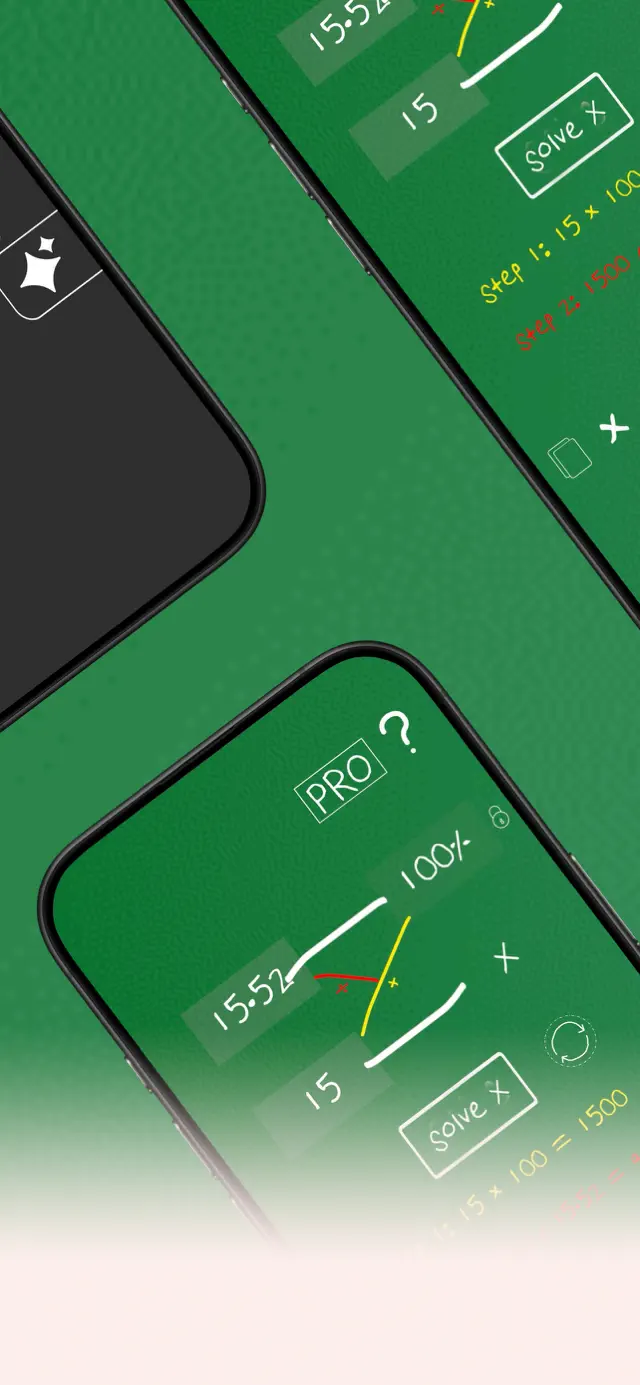
Every percentage question is a rule of three with base 100 — this handles those too.
Labelled quantities
Name your quantities so the answer reads as a sentence, not just a number.
How it works
Three steps to an answer
Enter three values
Fill in the three numbers you know and leave the unknown blank.
Pick direct or inverse
Direct if both quantities move together, inverse if one rises as the other falls.
Read the result
The fourth value appears with the full cross-multiplication working.
Guides
Learn the method, then check your work
Each guide walks through one kind of problem end to end, then drops the numbers straight into the calculator above.
How to Use the Rule of Three
Three numbers in, one out. The method, and how to lay it out so it works.
Read the guide →The Inverse Rule of Three
When more of one thing means less of the other, the formula flips.
Read the guide →Direct vs Inverse Proportion
One question tells you which formula to use. Ask it before you calculate.
Read the guide →Percentages with the Rule of Three
Every percentage question is a proportion with 100 on one side.
Read the guide →Scaling a Recipe Up or Down
Resize every ingredient properly, and know which ones do not scale.
Read the guide →Cross Multiplication Explained
The step in the middle of every proportion, and the reason it is allowed.
Read the guide →Resizing While Keeping the Aspect Ratio
Find the matching height for any new width, so nothing gets stretched.
Read the guide →Comparing Unit Prices
Put two different sizes on the same footing and compare honestly.
Read the guide →Converting Units and Currency
One method for kilometres, kilograms, cups and euros alike.
Read the guide →In the app
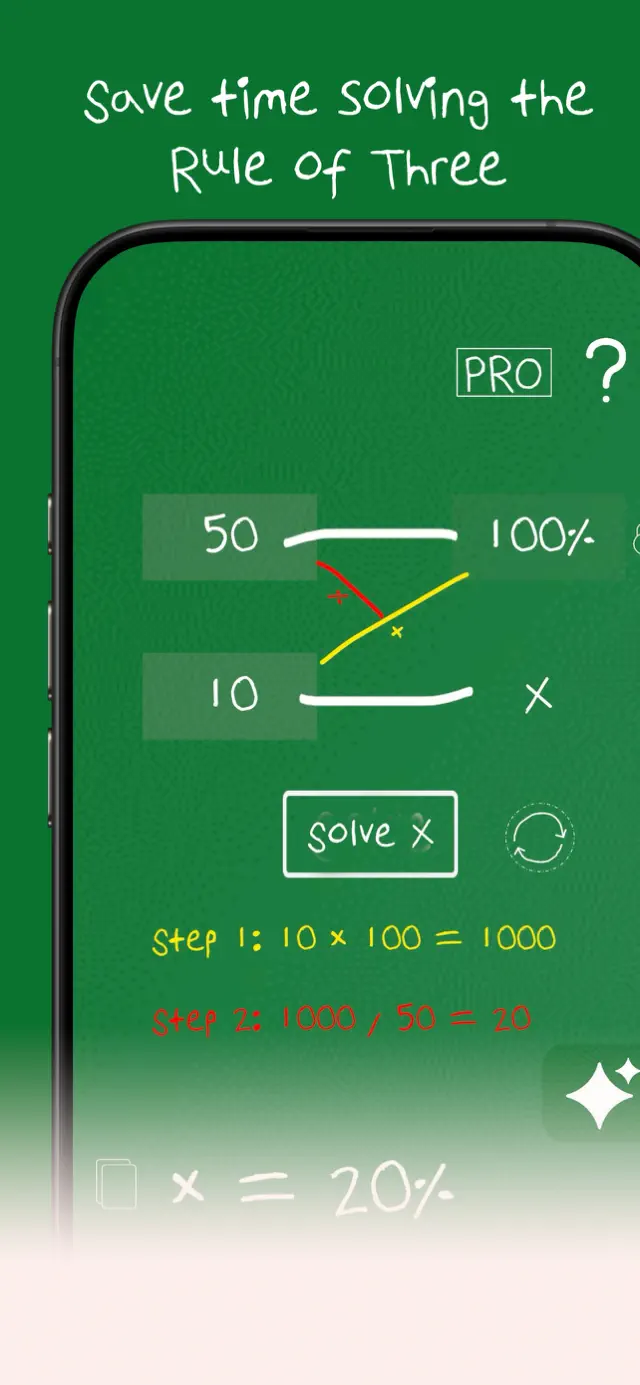
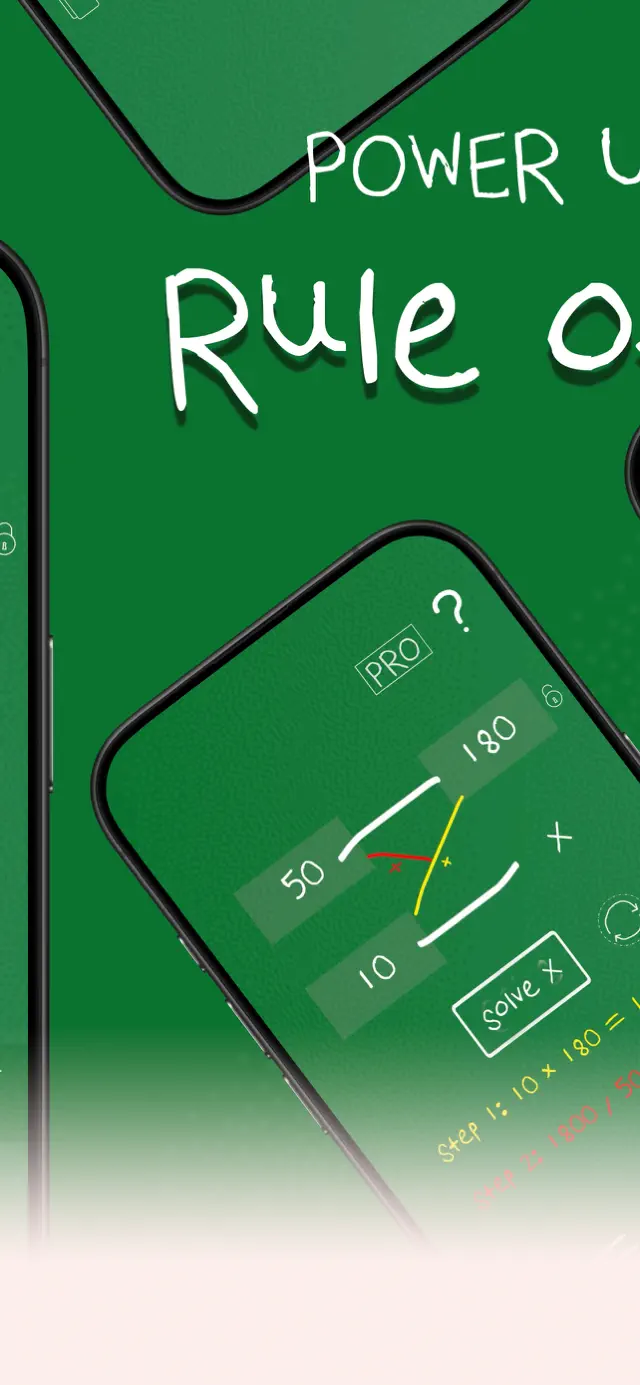
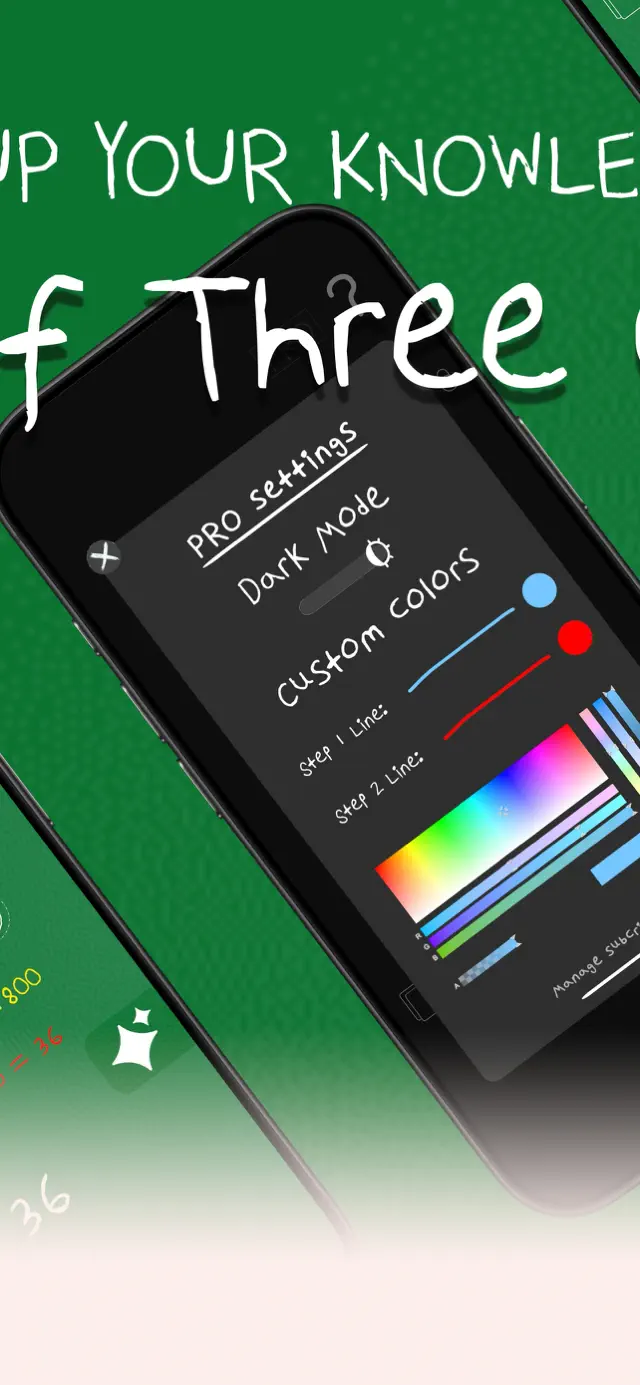
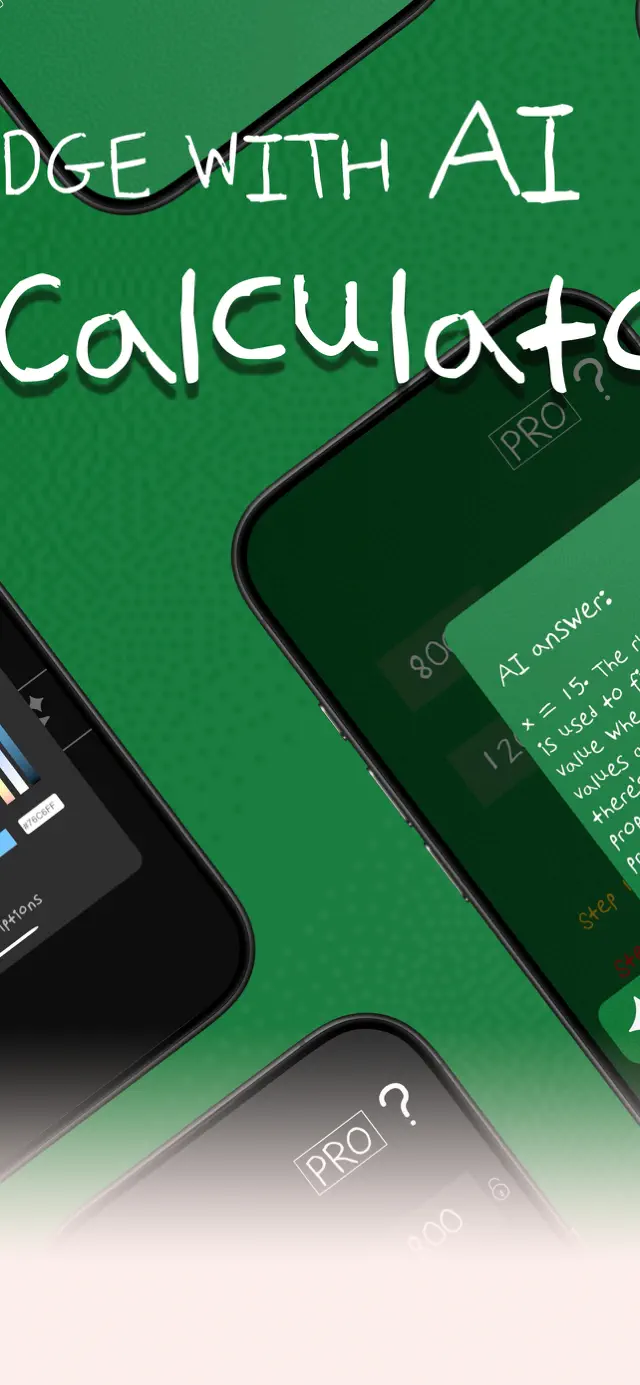
What Rule of Three Calculator looks like on your phone
The same calculator, built for touch — plus the AI explanation and dark mode that come with PRO.
FAQ
Questions people ask
What is the rule of three?
A method for finding a fourth value when you know three that are in proportion. If a corresponds to b, and c corresponds to x, then x = (b × c) ÷ a.
The rule of three in full →What is the difference between direct and inverse proportion?
In direct proportion both quantities move the same way — more hours, more pay. In inverse proportion one rises as the other falls — more workers, fewer days. The formula differs, so picking the right one matters.
Telling the two apart →How do you calculate a percentage with the rule of three?
Every percentage is a rule of three with a base of 100. For "what is 15% of 2000", set 100 against 2000 and 15 against x, giving x = (2000 × 15) ÷ 100 = 300.
Percentages by rule of three →Can it be used for recipe scaling?
Yes, and it is one of the most practical uses. If a recipe for 4 people needs 300g of flour, set 4 against 300 and 6 against x to find the amount for 6 people.
Scaling a recipe →How do I know which quantity is A and which is B?
A and B are the pair you already know go together. C is the new value of the same kind as A, and x is the answer, matching B.
Take Rule of Three Calculator with you
The app adds plain-English AI explanations, dark mode, and works offline — useful when there is no signal or the exam hall has no Wi-Fi.
Free to download. AI explanations and dark mode are part of the optional PRO subscription.